Showing posts with label Design. Show all posts

Thursday, 7 March 2024

UI/UX Design Books & Blog Resources Recommended for Designers

Editors note: The following article was updated on March, 2024, to offer relevant information about available UI/UX design resources and blogs.

Want to be an excellent designer? Looking for the best UI/UX books and resources? Nowhere to go or to gain the right and effective channel for becoming an outstanding UI/UX designer? Just follow me, I have compiled a list of high-profile UI/UX books, which are recommended by the major professional websites, and blogs.The topic is mainly covering UI design, UX design, and web design. Hope it is helpful and useful to you. Any resource you think it’s worth to be included, please feel free to give a message below the comment area or simply drop me a line on LinkedIn.

UX Books for Entry-level Designers

1.The Design of Everyday Things - By Donald A. Norman

Design of everyday things


It shows a teapot on the cover of the book, the teapot spout and the handle at the same side, if you tea, you are likely to burn yourself. What Norman want to tell you, the life is hard, often the "bad design" should be blamed. To learn interaction well, you must understand what’s the design requirements from people at first. As Steve Jobs said, “Design is not just what is looks like and feels like. Design is how it works.” The ultimate purpose of the designer is to make useful products, not just good-looking.


2.Don’t Make Me Think - By Steve Krug


Don’t Make Me Think - By Steve Krug

"Characters of this book, the first one is short and pithy, 200-page length, not wordy at all. You may put it devoured on a noon, perhaps before going to sleep, even on the plane, or on your way to work. (It’s more likely to read through it on the love when you get the book) " Therein, which stresses the three laws of Web Usability, the first one is - do not let me think.


3.The Non-Designer's Design Book - By Robin Williams

The Non-Designer's Design Book - By Robin Williams

Interaction designers must learn the basic knowledge of typography, no aesthetic, you can not be a good designer. In this ubiquitous creativity era, you have to make yourself be a designer.

In the eyes of Robin Williams, the design is quite simple. The book covers the four graphic design principles of C.R.A.P(Contrast, Repetition, Alignment, and Proximity), with concise, humor, and vivid language recounts the how much the changes and visible benefits brought by using these principles flexibly. In addition, it also introduces some basic knowledge about color and font, making the content more completely.


UX Books for Advanced Designers

1.
The Elements of User Experience - By Jesse James Garrett
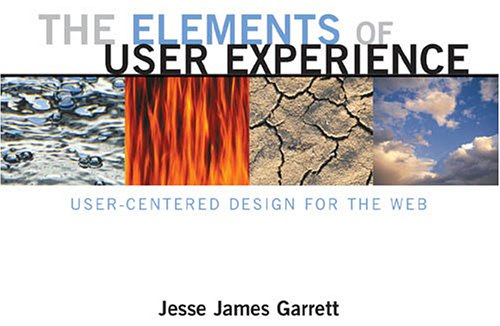
The Elements of User Experience - By Jesse James Garrett

If all you need is a book to teach you “how to design”, there are many, many books discuss how to build a website, but this one is not you wanted. If all you need is a book to tell you about technology, you can not find a line of code here. If you want to find an answer in this book, on the contrary, this book teaches you “how to ask the right questions.”

This book will tell you what you need to know in advance before you read other books. This book is for you, if you need a great concept, and if you need to understand the environment that user experience designers make decisions.


A Project Guide to UX Design:

“If you are a young designer entering or contemplating entering the UX field this is a canonical book. If you are an organization that really needs to start grokking UX this book is also for you.”-- Chris Bernard.


Communicating Design: Developing Web Site Documentation for Design and Planning (2nd Edition) - By Dan M. Brown
Successful web design team relies on good communication between developers and customers, but also inseparable from communication within the development team members. Dan Brown will teach you through this book, wireframes, site maps, flow charts and other design established a common language. Through it, the designers and project teams can capture ideas, track progress and always allow stakeholders to know the latest  situation of the project.


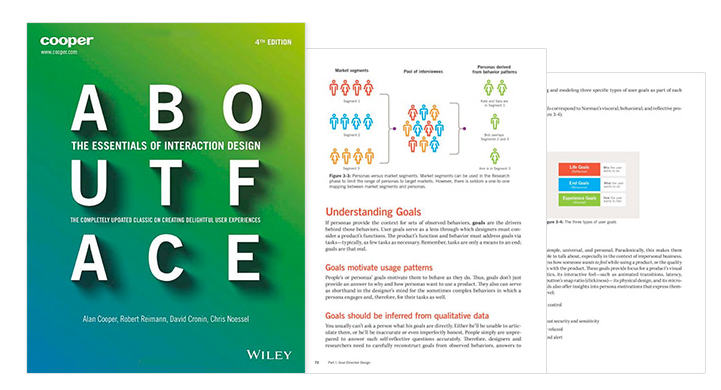
About Face: The Essentials of Interaction Design - By Alan Cooper,

As one of the must-read classic books, About Face series are worth the time to read, and each version is very valuable. As one of the instrumental books, AF brings interaction into the daily language of product design and development. Which is a comprehensive guide on interface design and interaction design of web and mobile devices. This book covers the best practices of project progress, goal-oriented design, persona development. For beginners who have no project experience, it may be very difficult, but still worth reading. We recommend cursory read at the first time and then study the rest part carefully when needed, because it involves too many details.

"If Norman is an old man telling stories, Krug is a crash expert let you simply entry design, while Cooper is a scholar, researcher, designer."


UX Websites & Blogs

1. Lukew

Lukew, a senior UX expert on digital product leader who has designed and built software used by more than one billion people worldwide also the founder of several companies.


A comprehensive website provides high-quality articles with the UX employee on Design, Coding, Mobile, and Word Press etc.


3. UXbooth

A professional UX website. The difference between it and Smashing Magazine is that UXbooth focuses more on the aspect of user experience design.


It’s a new blog with very simple and clean interface, no more distraction from advertisements or others. Articles are all surrounding the topics of design tools, UI/UX design, web design, and mobile app design. A good design topic resource to follow.

5. UXness 

The UXness Blog is your portal to a richer understanding of User Experience (UX) design. It's a treasure trove of insightful articles that dissect key topics like: UX fundamentals, Emerging UX trends, Practical UX design tips and tricks, Inspiring UX case studies, UX events, UX Tools, UX Books and UX principles and laws etc. UXness is a community of 35K+ UX enthusiasts connect across the globe and have ~2K daily article reads.  


About Author

Grace Jia
Prototyping tools, UI&UX news & information, article sharer, writer.
Email: grace@jongde.com 
Web: Mockplus
Share:
Continue Reading →

Thursday, 1 February 2024

The Best UX/UI Designer Tools, Resources, Blogs & Books Collection

Editors note: The following article was updated on March, 2024, to offer relevant information about available UI/UX design resources and blogs.


It can be intimidating to get into user experience, but don’t fear: there’s plenty of help around. To help you navigate that sea of information, we make a cool list to share with you. This list covers UX/UI blogs, resources, books and tools (in no particular order). I hope it will help you guys to get better at what you’re doing!

UX Blogs and Resources


1. Awwwards -A place to find inspiration and talent; a space for debate; a place to share knowledge and experience.

2. UX Magazine -This site creates a community with location-based listings for conferences, jobs, workshops, informal meetups, and classes.

3. UX Myths -Collects the most frequent user experience misconceptions and explains why they don’t hold true.

4. Designer News -Best UX/UI related articles collection.

5. Usability Geek -A wider array of topics that extend beyond usability, such as User Experience (UX), conversion, Human Computer Interaction (HCI) and Information Architecture (IA).

6. Lukew -A Product Director at Google shares his views on Web and device strategy, interaction design, visual design, usability, and much more.

7. UXnessA The UXness Blog is your portal to a richer understanding of User Experience (UX) design. It's a treasure trove of insightful articles that dissect key topics like: UX fundamentals, Emerging UX trends, Practical UX design tips and tricks, Inspiring UX case studies, UX events, UX Tools, UX Books and UX principles and laws etc. UXness is a community of 35K+ UX enthusiasts connect across the globe and have ~2K daily article reads.

8. Design Talks -545 Talks for Designers from 68 UX/UI conferences all over the world.

9. HelloErik Experience Design -The design and experience blog of Erik Flowers.

10. Weeklypixels -Reviews on design Books, user experience books, UX processes, graphic design books, typography books, lettering books.

11. UX Booth -Feature content on analytics, content strategy, information architecture, interaction design, philosophy, research, universal design and accessibility.

12. Mockplus Blog -The newest UX/UI design resources recommended for UX and UI designers.

13. Smashing Magazine’s UX Design Category -UX/UI experts share with you their valuable ideas, practical tips, useful guidelines, recommended best practices and great case studies.

14. Design Shack -Showcases inspiring examples of design, alongside resources and articles.

15. Creative Bloq -It is a high volume blog for creatives that features content on web design, illustration, graphic design, 3d, digital art, and more.

16. Beautiful Pixels -Showcases some of the best examples iOS and Android apps as well as UI design across various types of media

17. UX Movement -Publish articles showing how good and bad interface design practices affect user behavior.

18. DesignModo UX -Resource for both beginners and advanced designers looking to expand and improve their knowledge.

19. 1stwebdesigner -Post the latest design resource for UX/UI designers.

20. Noupe -Feature content on responsive design, UX/UI, web development, inspiration and more.

21. Six Revisions -Publish articles, guides, tutorials, news and other forms of content for people who design and build sites and apps.

22. Speckyboy -Fresh and useful resources and inspirational art, covering web design and development, graphic design, mobile development.

23. Designzzz -Offers free and useful resources for designers and developers.

24. Vandelay Design -Post creative bouts of inspiration that we all need for success.

25. Boxes and Arrows -The practice, innovation, and discussion of design.

26. InspirationFeed -You’ll find industry guidelines, case studies, design & development resources, tips & tricks, and other related web articles here.

27. Usabilla Blog -Useful UX articles or designers.

28. Dribbble -An online community for showcasing user-made artwork.

29. Behance -Showcase and discover the latest work from top online portfolios by creative professionals across industries.

30. NN/g -A leading voice in the user experience field.


Free UX & UI Books


Click here for more details about these UX books.

We hope you enjoyed getting to know about these design resource and tools. Hopefully, through them, your journey of being a UX or UI becomes easier!


About Author

Becky
Email: becky@jongde.com


Share:
Continue Reading →

Tuesday, 6 September 2022

The Science Behind Better Experience Design

What if I were to tell you that we can rig how consumers remember brand experiences; inducing positive memories and completely overriding negative ones?

Peak-End Rule
The peak-end rule is a psychological heuristic, or mental shortcut, that impacts how people remember past events.

For brands, it’s paramount  to consider all of the cognitive biases that affect the customer decision process.

In understanding this, we can maximise our ability to establish deeper, richer connections with our consumers with less effort.

Peak end rule


The science

The peak-end rule suggests that our brains simply cannot remember every detail of every day, we are limited in what information we can store.

Our brain shortcuts this process by condensing our experiences into a series of snapshots, consisting of the intense positive or negative moments (the “peaks”) and the final moments of an experience (the “end”).

Interaction Design Foundation IDF  Free Membership Offer


Conceived by professors Kahneman & Tversky in 1999, several studies, conducted over an array of diverse circumstances, support the theory’s validity.


inside airplane sitting


PEAK-END AT WORK


Creating peaks:
Television commercials that create positive feelings are rated more highly by viewers if there are peaks of intensity and end on a positive note, rather than a commercial that was consistently pleasant all the way through.

Holidays that ended on a bad flight home are remembered less favourably, despite everything on the holiday going well.


The perils of an unhappy ending:
A 2008 study demonstrated that college students who received a desirable gift, followed by a less desirable gift, were less happy than college students who only received the one desirable gift, despite receiving an extra gift.

Likewise, children were more pleased after receiving a chocolate treat alone, rather than a chocolate treat followed by a mildly enjoyable piece of gum.


DISCLOSURE: This post may contain affiliate links, meaning when you click the links and make a purchase, we receive a commission.

UX Design certificate by Google


Negative experiences are redeemable:
It’s no wonder women subject themselves to the pain of childbirth all over again, willingly, when their harrowing experiences end on such a rewarding high of a child.

A study proved that even a colonoscopy that had an extra 20 seconds, which were merely uncomfortable, not painful, added on to the end was rated better than those who did not receive the extra 20 seconds, despite being in discomfort for longer.

As a less gross example, patrons who received an otherwise negative dining experience, but were given a free dessert at the end, rated their experience considerably more favourably than those who did not.


“Manufacture the emotional peak purposefully, to create it by design.”
Adam Toporek, CX thought leader and author

ENTERPRISE SOFTWARE 

Onboarding in software is a key opportunity to consider Peak-end. Modern apps like Slack focus on frictionless journeys which leave users feeling good about the experience.

Enterprise softwares


In summary
Cognitive biases arbitrate entire segments of our memories so all that is left is how we felt during the peak and the end of the experience.

So how can we use this to our advantage?

Don’t be passive in allowing a consumer to meander through interactions with your platforms, be active; curate intentional designs devised to be affecting.

Brands need to design experiences for their consumers that will create an indelible impact. They will always remember the peaks and the end, so be exciting, surprising, and go out with a bang.


About the author

Anna Ryan is a strategist at Athlon working within research and insights. Her work helps create brand and product experiences that transform global brands and scale-ups.

For more information on Athlon contact 
Ranzie Anthony 


Athlon company logo


Interaction Design Foundation IDF  Free Membership Offer


Share:
Continue Reading →

Friday, 3 June 2022

How to design a good logo?


There are many ways to design a good logo, but we are sharing some important points which will be helpful in designing logos.
First let understand what is logo?

In simple terms logo identifies a business in its simplest form via the use of a mark and icon. 
“Justcreative.com”


1. Start with design brief & research?

After getting the brief by preparing questionnaire or interview with client always start with research.
- Get the full information about the companies’ history.
- Understand the companies name and type of product they are producing.
- What is their mission and vision?
- Who are the competitors of the company?
- What is their current market position?
- What is the current trend in the market related to design?
- Always ask the constraints to the client related to color because some clients have their establish color in the market.
- Know each and every detail which is required to design a good logo.


Logo design research


The benefit of the research is that you will get clear picture what is the expectation of client also it will help in designing the appropriate logo design according to market and competitor.


2. Sketch

Well it will be great if anyone is following a design process but can move ahead to the Sketch part because it is one of the important part in it. Start conceptualizing the ideas on paper before moving to the computer because once you will put all the thoughts on the paper then it will be easy to choose the few and finalize concepts for the digital designing process.
    

Logo design sketching


3. Choose the right Color

Always try to get the right color for the logo because different color has different meanings, communicate ideas and it affects organization/product image in the market. Also keep in mind that your logo should also function in gray-scale in worst situation.
     

Logo design choosing right color

4. Keep logo simple

While designing logo try to keep it simple because human mind scan & remember simple things easier and longer. As you can see flat design is a best example for it they have reduced the clutterness and removed the unwanted elements in the design. Same logic works in the logo design also. A simple logo is always memorable.
  

Keep logo simple


5. Logo should be versatile

Logo should be versatile because it is used in different places and in different collateral so it should work across variety of medium and application.

Logo should be versatile Apple logo

Top UX Courses at Udemy


6. Logo should be unique

Logo should be unique in that way that it should stand out in the crowd and the market. For example apple logo without byte has no meaning it is that byte which makes it unique.


Logo should be unique Apple Logo


7. Logo should be scalable

Logo should be scalable for that always start making designing in vector format because it is always scalable. Logo must be scalable and effective in inch sizes. 


Logo should be scalable Nike Logo


8. Better to have your handmade font for logo

It will be great if you made custom typeface/font for logo because if you are going with available fonts in the market then it will not be unique more once it is discovered by other people. So always try to make custom handmade fonts.
   

Font for Logo design


9. Learn from other’s logo success

Always look in to other works and learn from their successful logo story. Thousands of great successful logo case studies are available online read it to understand their process and their thinking what techniques they used to make a good logo.


Shell logo timeline


10. Learn the software

Well if you are a graphic designer then it is expected that knows that software which is required for logo designing if not then start learning software from today itself. It hardly takes a month to mastering it. Illustrator and Coraldraw are the main software which is used by most of the designer and lots of tutorials are available online. But always keep in mind with brainstorming or idea jumping on the software is not going to help you.

Logo design tools, Adobe Illustrator, Corel Draw


Author: Shivin Mittal@MittalShivin)


Share:
Continue Reading →