Showing posts with label behavioral psychology. Show all posts

Friday, 1 March 2024

What is Empathy in UX Design?

Empathy mapping in UX design

What is Empathy?

Empathy is the ability to understand and share the feelings of others. In the context of UX design, empathy means understanding the needs, wants, and feelings of users and designing products and experiences that address those needs. 

“What makes us human is what is delightful.” — Genevieve Bell, Anthropologist noted for cultural-practice-and-technological-development work


There are some key elements which involves in the empathy in UX design such as: 

  1. Understanding users: Empathy requires designers to understand their users on a deep level. This means researching their behaviors, motivations, and goals through user research, interviews, and other methods.

  2. Testing and iteration: Empathy also means being willing to test and iterate on designs based on feedback from users. This involves conducting user testing and gathering feedback to improve the user experience.

  3. Designing for users: Once designers understand their users, they can design products and experiences that meet their needs. This involves creating user personas, journey maps, and other tools to guide the design process.

  4. Enhancing Emotional Connection: Empathy helps designers to create emotional connections with users by understanding their emotions, feelings, and motivations. Products that are designed with empathy are more likely to resonate with users on a deeper emotional level, which can lead to greater user satisfaction, engagement, and loyalty.

By incorporating empathy into UX design, designers can create products and experiences that are not only functional and usable, but also emotionally engaging and satisfying for users. This can lead to greater user satisfaction, loyalty, and ultimately, business success.


3 Months free Interaction Design Foundation


Empathy is a critical element of UX design because it helps designers create products and experiences that are more user-centered, emotionally engaging, and effective at meeting user needs.


What is Empathy Mapping? 

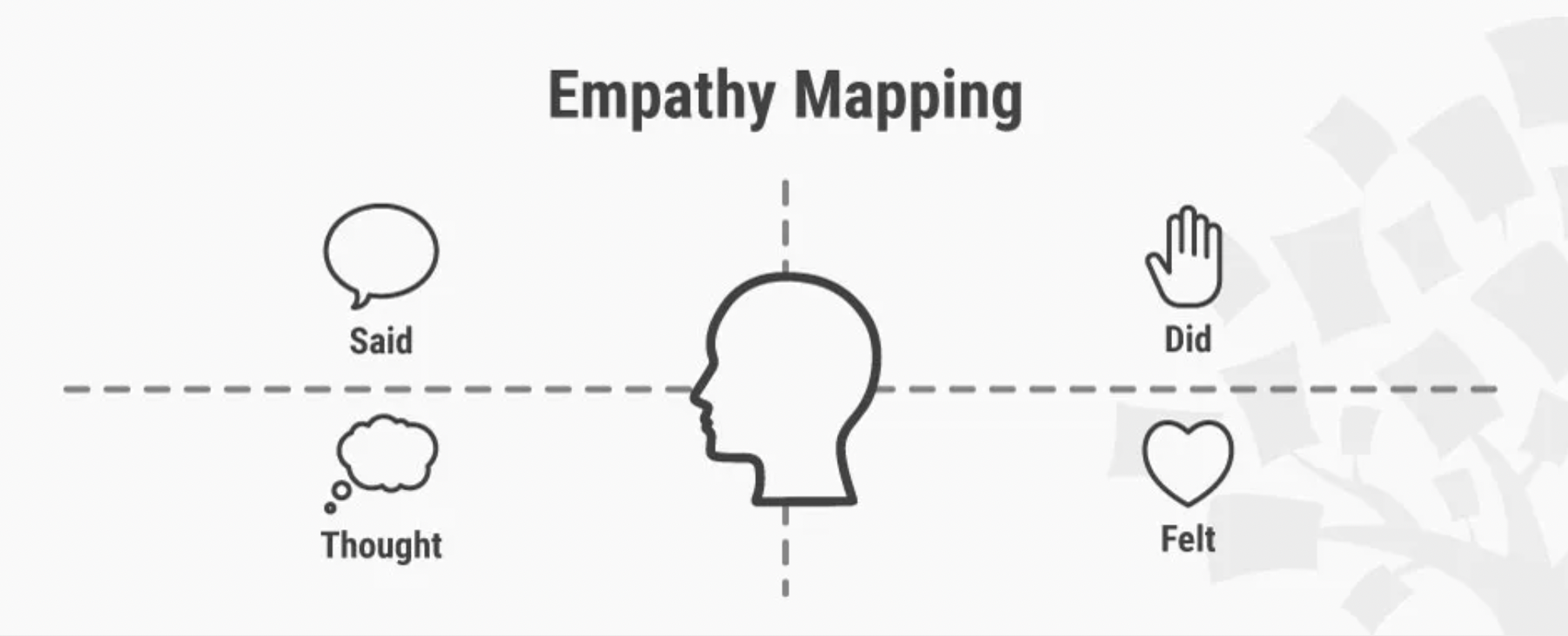
An Empathy Map allows us to sum up our learning from engagements with people in the field of design research. The map provides four major areas in which to focus our attention on, thus providing an overview of a person’s experience. Empathy maps are also great as a background for the construction of the personas that you would often want to create later.


Further readings


Hero image source: Interaction Design Foundation

3 Months free Interaction Design Foundation

Share:
Continue Reading →

Sunday, 26 February 2023

Psychology in User Experience Design and User research

Psychology in User Experience Design and User research

What is Psychology?

Psychology is the scientific study of mind and behavior. Psychology includes the study of conscious and unconscious phenomena, including feelings and thoughts. It is an academic discipline of immense scope, crossing the boundaries between the natural and social sciences. (Wiki)


Learning about psychology in UX Design

UX designers should learn psychology because it can help them create better user experiences. Understanding human behavior, motivation, and cognition is essential for designing products that meet the needs of users. UX designers need to empathize with their users to create products that meet their needs. Understanding psychology can help designers gain a better understanding of users' thoughts, feelings, and behaviors, which can inform the design process. Psychology can inform user research methods, such as surveys, interviews, and usability testing. Knowledge of psychological theories and concepts can help designers create research questions that provide insights into user behavior and motivation. 


3 Months free Interaction Design Foundation


UX designers often aim to persuade users to take specific actions, such as signing up for a service or purchasing a product. Understanding psychological theories, such as social proof and cognitive biases, can help designers create persuasive designs that are more effective. Understanding human behavior, motivation, and cognition can inform user research, interface design, and persuasive design, leading to products that are more effective and engaging for users.


Role of Psychology in UX Design

Psychology plays a crucial role in UX (user experience) design. UX designers aim to create digital products that are intuitive, easy to use, and engaging for users. Understanding human behavior, motivations, and cognitive processes is essential for designing products that meet these criteria. Here are some ways psychology informs UX design:

  1. User research: UX designers often conduct user research to gain insights into the behaviors, motivations, and needs of users. This research can be informed by psychological theories and concepts, such as cognitive load theory, mental models, and decision-making processes.

  2. User interface design: The design of user interfaces is informed by psychological principles. For example, the use of color, typography, and visual hierarchy can influence user perception and behavior. Understanding how users process visual information can inform the design of interfaces that are easy to navigate and understand.

  3. Usability testing: Usability testing is a critical component of UX design. Psychologists have developed various methods for evaluating user experience, such as usability testing, heuristic evaluation, and cognitive walkthroughs. These methods help designers identify usability issues and improve the overall user experience.

  4. Persuasive design: Persuasive design aims to influence user behavior by appealing to their emotions, motivations, and cognitive biases. Psychological theories, such as social proof, scarcity, and loss aversion, are often used in persuasive design to encourage users to take specific actions.

DISCLOSURE: This post may contain affiliate links, meaning when you click the links and make a purchase, we receive a commission.

Top UX Courses at Udemy


Psychology in Digital experiences

Cognitive psychology principles are combined with cognitive modeling as a way of creating the best possible interfaces. Researchers try to predict user behavior and then design around inherent and anticipated limitations, in order to create an interface that is efficient and intuitive for the users to maneuver and interact with. Psychology is used in digital experiences in various ways to create more engaging and effective user experiences. 

  1. Persuasive design: Psychology is used in persuasive design to encourage users to take specific actions, such as making a purchase or signing up for a service. Techniques such as social proof, scarcity, and loss aversion are often used in persuasive design.

  2. Gamification: Psychology is used in gamification to make digital experiences more engaging and fun for users. Gamification techniques, such as rewards and badges, are designed to appeal to users' motivation and encourage them to engage with the product.

  3. Personalization: Psychology is used in personalization to create experiences that are tailored to individual users' needs and preferences. Personalization techniques, such as content recommendations and personalized messaging, are informed by user data and psychological theories.


Psychology plays a critical role in UX design by informing user research, interface design, usability testing, and persuasive design. By applying psychological principles and theories, UX designers can create products that are more effective, engaging, and enjoyable for users.


Further read: 

What is Cognitive Psychology?


Understand the Elements and Thinking Modes that Create Fruitful Ideation Sessions


Be Afraid! The Silent Role of Fear in Decision Making


3 Months free Interaction Design Foundation


Share:
Continue Reading →

Sunday, 30 October 2022

Confirmshaming: How to get users to hate your product?

Dark patterns are design elements used in online interfaces that are intended to force or trick people into acting in ways they would not normally under normal conditions. These strategies, which are based on considerable behavioral psychology research, are unethical. Since legislation to ban the use of dark patterns has recently been introduced, they may soon also be prohibited. It benefits UX designers and marketers to recognize them and steer clear of them. 

As a designer or a product manager, in order to avoid deceptive patterns, first you need to be aware of them. Let’s discuss one of the most common deceptive patterns we probably see almost every day, if not more: confirmshaming.

Confirmshaming, often referred to as a negative opt-out, is a passive-aggressive marketing strategy that implies that you are a loser just because you do not want a particular product. 


You have probably encountered this situation: you’re browsing a website, a donation banner pops up asking if you want to help starving children in Africa. You want to close the banner but there is no close button (or simply an X icon). You have no way out but to answer the question. And the questions and answers sound like this:


Do you want to help starving children? 
Yes, I’m donating now. 
No, I don’t care about children.

Sounds familiar? Probably yes. According to them, you are an ignorant person letting children starve to death. Does it make you feel bad about yourself? Most likely, yes. Well, it shouldn’t; they are designed to make you feel inadequate, and probably are fake too. But this is not the only kind of confirmshaming. Let’s look at some examples and analyze what is unethical about them.

confirmshaming - popup example


It seems like an innocent one. If you don’t read, then you wouldn’t need 80 books. But should you feel lazy about rejecting the offer? You definitely shouldn’t!


3 Months free Interaction Design Foundation


confirmshaming - popup example

There must be some other ways to look your best, isn’t there? Even if you don’t want to look good, who are they to judge?


confirmshaming - example


Isn’t it true that no one enjoys ads? Especially the ones that pop up while playing a game. But you don’t have to pay for each game or website to avoid seeing ads. So which one should you tap? None? So you see. Avoiding deceptive patterns in the product can make a huge difference in the user’s experience and the brand’s reputation. Life is not a piece of cake anyway, so why not make the world a better place to live as much as we can?


DISCLOSURE: This post may contain affiliate links, meaning when you click the links and make a purchase, we receive a commission.

Top UX Courses at Udemy


About Author,

UX Author Zarina

Zarina Majidova 

UI/UX designer 
Chillchat, Bangkok, Thailand
I am a UI/UX designer, design thinker, UX researcher, and human-loving introvert. I really love what I do.


3 Months free Interaction Design Foundation


Share:
Continue Reading →