Think data has no place in serious UX?
After all, designers have always followed their 'instinct' and 'creative intuition' to birth impactful designs. While there's nothing wrong with this process, the advent of technology has led to an improved data-driven design discipline--one where data and design are one-and-the-same-thing.
Here's a quick run-through of why a data-driven design thinking process is critical for driving a more human-centered design--now more than ever:
- It can help create an optimal user experience and improve business outcomes. In fact, research indicates that “Companies in the top third of their industry in the use of data-driven decision making was, on average, 5% more productive
and 6% more profitable than their competitors.”
- It can provide a mix of empirical and intangible user data (aka quantitative and qualitative data) that covers the entire spectrum of the end-users journey with the brand--from the who and the what to the why and the how aspects.
- It acts as a rich repository of user information that can help designers to stop relying on the standard industry best practices, find the correlation between the design and the user, and innovate at scale.
The writing is on the wall: User experience design is no longer about choosing complimentary colors or creating a 'good-looking' design, it is about understanding the psyche of the end-user and using customer data to drive 'relatable,' 'useful,' and 'personalized' designs that engage and entertain.
How to Use Data to Create a Human-centered Design? Top-3 Strategies
1. Conduct UX research, create an in-depth user persona, and gather critical user information:
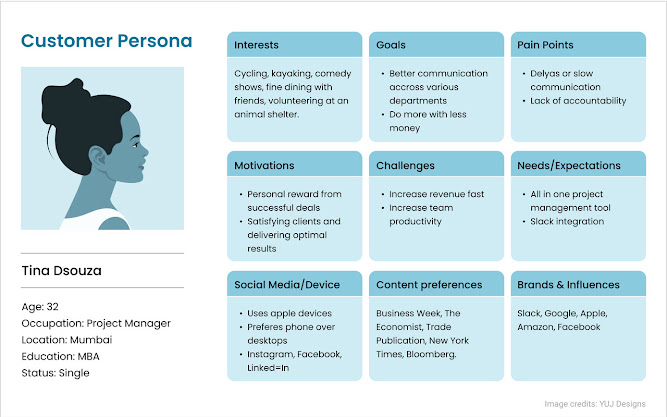
Think of user personas as the blueprint to your design-thinking process. Here's an example of a B2B buyer persona for inspiration that includes all the key elements such as basic demographics, goals, fears and challenges, hobbies and interests, and so on:
Buyer personas are reflective of your ideal customer and are always evolving with time. So make sure to collect data at regular intervals instead of collecting it all at one go. Before you start gathering the data for creating a buyer persona, ask yourself the following questions:
- Why is building the user persona important in the overall design process?
- What kind of tools, channels, and sources should you use to gather accurate information related to your user and build a comprehensive user persona?
Once you've gathered all the information, use the persona to guide your design thinking process in terms of who your ideal user is, what their motivations, requirements, attributes, and behaviors look like, and how design elements can positively influence their interaction with the brand. For instance, designers can integrate the most important product features within a particular design to reel the users in.

2. Use data to integrate empathy and lay the foundation for a human-centric design approach:
"Data science is now an essential skill for every UX team. If you don’t have people who understand how to do data science, you cannot create great designs.”
— Jared Spool
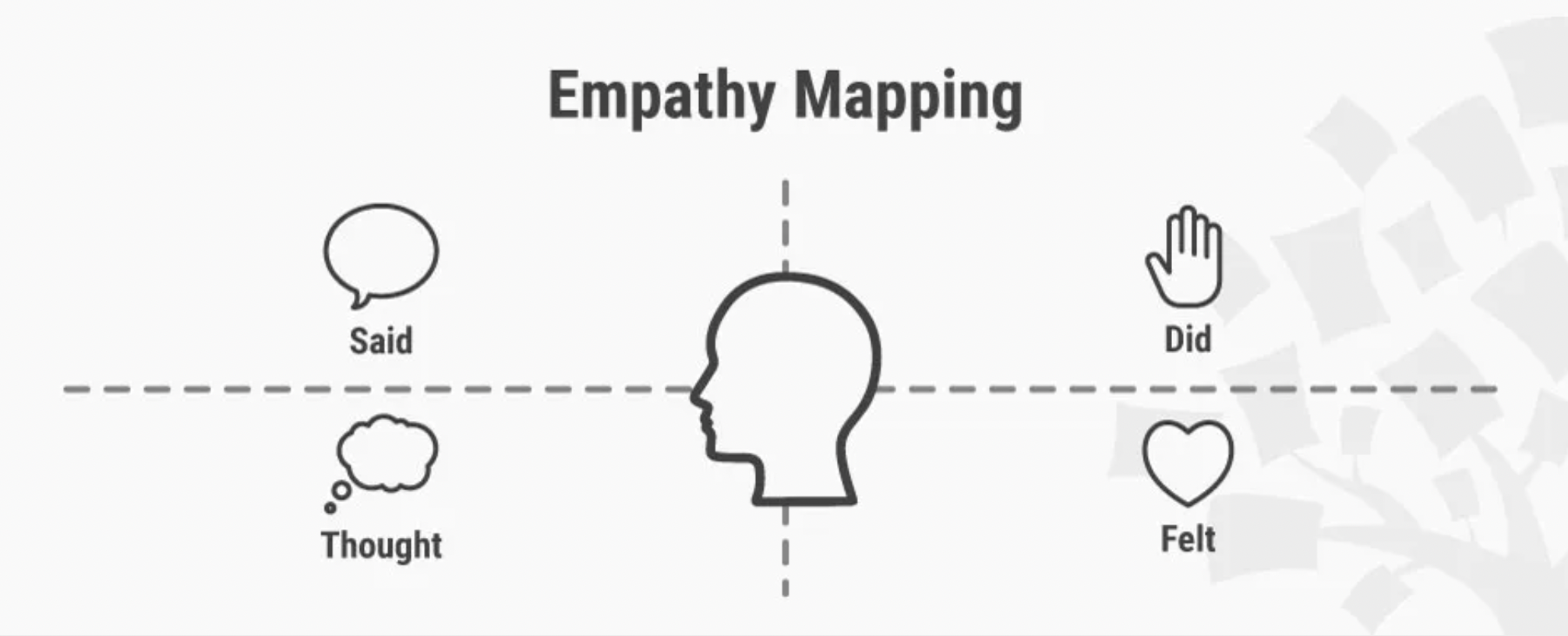
Properly visualized data gives the design a human focus. It empowers designers to leverage empathy as a core design tool and make designing decisions that pave the way for useful and meaningful user experiences.
The best shot at delivering a human-centered design is by leveraging data to solve real-world problems and put the user's needs first, leading to an 'informed' design process. Without understanding your core audience's needs from emotional and rational perspectives, a human-centric design cannot be possible.
Long story short, there's a greater need to blend the rational truth, which data provides, along with a designer's empathy-led thinking process. This simple-yet-significant strategy can empower brands to deliver an impactful user experience that actually solves the customer's key pain points instead of serving as mere 'eye candy.'
3. Uncover deep insights to redesign the UX:
In cases where the user experience needs to be redesigned (and not designed from scratch), data comes in handy. Brands can use the right mix of data analytics tools to understand:
- What's going wrong within the user experience?
- What's working well for the user experience?
- Are the users engaging with the design?
- What kind of recurring themes, patterns, and opportunities related to user behavior and experience seem to be jumping out from the data collated?
The end goal is to completely immerse yourself in the design research and extract deep insights into the positives and negatives. This collated data can then be used to segment users and target them specifically via different user experiences (if need be).
Bringing it all together
Let's put the record straight: Data analytics can add value to the design thinking process by:
- Rooting the design in real-time user data, which makes the design more personal and relatable for the end-user
- Helping designers to understand the user from the inside out and use the information to visualize and create a powerful user experience
- Enabling designers to amplify the design by marrying the business goals with the end-user's needs
In the end, the primary challenge is not finding data in today's data-rich digital environment, it is making sense of the data gathered, followed by informing the design process to add value to the customer's life, one design at a time.
About author:

YUJ Designs
We are a global UX Design Studio delivering valuable experiences for humans that impact businesses.
Website LinkedIn
DISCLOSURE: This post may contain affiliate links, meaning when you click the links and make a purchase, we receive a commission.









%20in%20India.png)