
By Parul Sharma | Published on: August 2023
In the not-so-distant past, User Experience (UX) designers faced a challenging task of making products and services intuitive and user-friendly without the aid of advanced technology. They had to manually collect data and conduct face-to-face interviews to understand user needs. However, the landscape of UX design has transformed drastically with the integration of Artificial Intelligence (AI) and Machine Learning (ML) technologies. These powerful tools have revolutionized the way designers create intuitive user experiences, making the process more efficient and effective.
The Struggles of Pre-AI UX Design:
Before the era of AI and ML, UX designers had to rely on traditional methods to gather user insights. They spent countless hours conducting surveys, performing usability tests, and conducting in-person interviews with users. This process was not only time-consuming but also limited the scale and scope of their research. Additionally, analyzing vast amounts of data manually was a daunting task, leading to potential errors and biases in the design process.
Example: Netflix - Old vs. New
Earlier, Netflix relied on traditional user surveys to understand viewer preferences. This often resulted in a limited understanding of user behaviors and preferences. However, with the introduction of AI-powered recommendation systems, Netflix now collects vast amounts of data on user interactions, viewing habits, and preferences. This data is then analyzed by machine learning algorithms to suggest personalized content, enhancing the user experience significantly. Figure 1 provides an example.

The UX Revolution with AI and ML
The integration of AI and ML technologies has transformed the UX design process, making it more data-driven and user-centric. With the help of AI-powered analytics and data collection tools, designers can now access valuable user data on a large scale. This enables them to gain deeper insights into user behaviors, preferences, and pain points, leading to more informed design decisions.

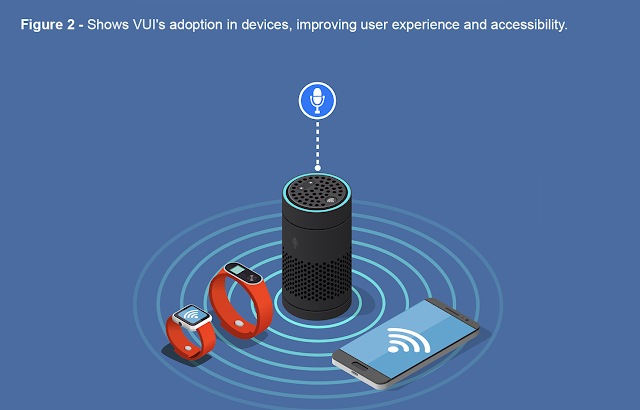
Example: Apple's integration of Siri
An AI-powered intelligent assistant has revolutionized user interactions with their devices. Siri uses Natural Language Processing (NLP) and Machine Learning (ML) algorithms to understand user commands and provide relevant responses. This seamless integration enhances the user experience, making it more intuitive and user-friendly. Refer to Figure 2
AI and ML in Current UX Design
Today, AI and ML have become integral components of UX design across various platforms and services. From e-commerce giants like Amazon to social media platforms like YouTube, these technologies play a crucial role in creating personalized and engaging user experiences.
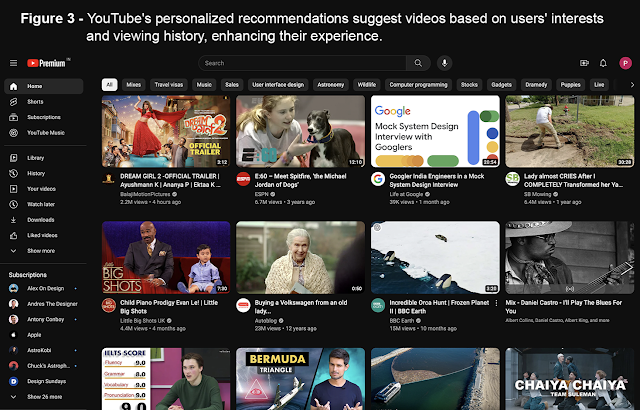
Example: YouTube - Video Recommendations
YouTube uses AI and ML algorithms to analyze user interactions with videos, identifying viewing patterns and preferences. This data is then utilized to recommend relevant content to users, keeping them engaged and increasing their time spent on the platform.
The Future of UX Design with AI and ML
Looking ahead, AI and ML are expected to continue shaping the future of UX design. Here are some exciting possibilities.
- Hyper-Personalization: AI and ML are revolutionizing the concept of personalization by enabling hyper-personalized user experiences. Traditional personalization techniques often relied on basic user demographics and behavior data, resulting in somewhat limited customization. However, with the power of AI, UX designers can now gather and analyze vast amounts of data from users in real-time.
By leveraging this data, AI algorithms can discern patterns, preferences, and behavior trends on an individual level. As a result, products and services can dynamically adapt to each user's unique preferences and needs. Whether it's recommending personalized content, adjusting the user interface layout, or tailoring product suggestions, hyper-personalization enhances user satisfaction and engagement.
DISCLOSURE: This post may contain affiliate links, meaning when you click the links and make a purchase, we receive a commission.

- Anticipatory Design: Anticipatory design is a UX design approach that uses machine learning algorithms to predict user actions and needs proactively. This concept aims to reduce the cognitive load on users by eliminating the need for explicit input. ML algorithms analyse historical data and user behaviour patterns to anticipate what users are likely to do next.
For instance, anticipatory design might offer relevant suggestions before the user even searches for something or provide quick access to frequently used features based on past interactions. This anticipatory nature of UX design enhances user convenience, streamlines interactions, and creates a sense of seamless and intuitive experiences.
- Emotion Recognition: One of the most promising applications of AI in UX design is emotion recognition. AI algorithms can analyse various inputs, such as facial expressions, voice tone, and even biometric data, to infer a user's emotional state. Understanding users' emotions allows designers to tailor experiences accordingly, creating more empathetic and human-like interactions.
For instance, if a user appears frustrated, the system can respond with more patient and helpful messages. On the other hand, if a user seems excited, the interface can adapt to amplify the positive experience. Emotion recognition adds a new dimension to UX design, forging deeper connections between users and digital products.
- Voice and Gesture Interfaces: Natural language processing (NLP) and computer vision advancements are rapidly progressing, leading to more sophisticated voice and gesture-based interactions. Voice-controlled interfaces, such as virtual assistants, have already become commonplace, but future advancements will make them even more accurate, responsive, and capable of handling complex tasks.
Similarly, gesture-based interfaces that respond to hand movements and body language are gaining traction. These interfaces will reduce the reliance on traditional input methods like keyboards and mice, making interactions more intuitive and natural. As AI and ML enhance these technologies, we can expect a seamless integration of voice and gesture interactions into various products and services.
Conclusion
The future of UX design is undoubtedly intertwined with AI and ML technologies. These tools have already demonstrated their potential in revolutionizing how designers create intuitive experiences, making the process more efficient and user-centric. As AI continues to advance, the possibilities for enhancing UX design will be limitless, ultimately resulting in more seamless and enjoyable user interactions across various platforms and services.
By embracing AI and ML, UX designers can achieve hyper-personalization, anticipate user needs, recognize emotions, and develop sophisticated voice and gesture interfaces. Such advancements will not only benefit designers but, most importantly, the end-users, creating a more connected and user-friendly digital world. As the technology continues to mature, the focus on empathetic and human-centered design will shape the future of UX, leading to better user experiences for everyone.
About Author

Parul Sharma
Senior UX Designer, Oracle
Bangalore, Karnataka, India
Parul, a Senior UX Designer at Oracle, is known for her excellent work in experience design and user research. She specializes in SaaS solutions and has extensive experience in E-commerce and Fin-tech. With a remarkable ability to understand user needs, she creates user-friendly websites and apps.
Besides her UX design skills, she is an engaging speaker who shares insights worldwide on designing intuitive and elegant systems. Parul has successfully led design projects for Fortune 500 companies and creative startups, leaving a significant impact in the world of UX design.
Specialties: Accessibility, User Research, Visual Design
Get 14 days FREE trial of IxDF Membership









%20in%20India.png)
